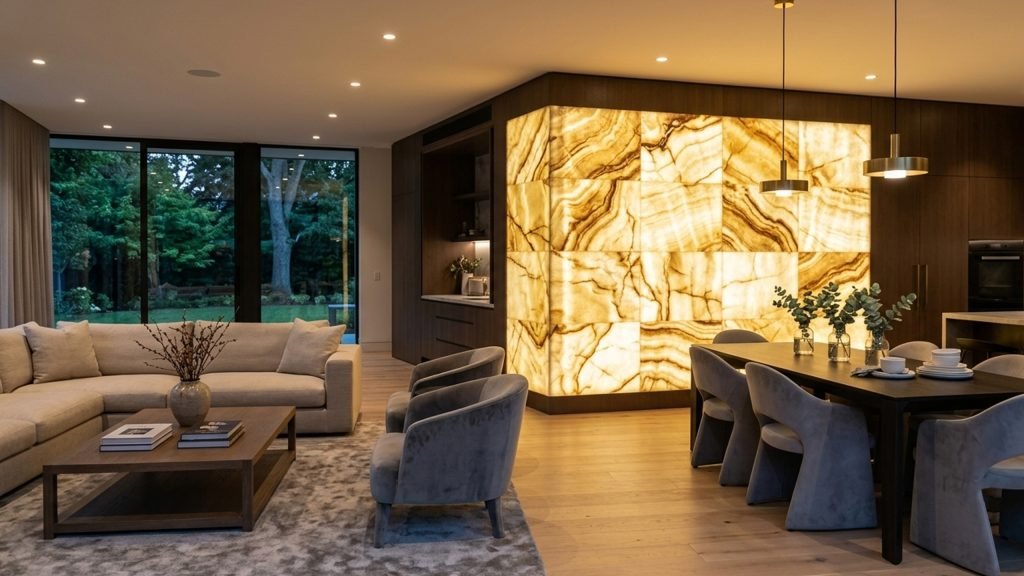
A backlit stone feature wall depends on two elements working together: the material and the light behind it. The stone brings movement, color, and natural variation. The lighting reveals what is hidden beneath the surface. When both are considered carefully, the result can feel atmospheric, architectural, and highly refined.
Cristallo quartzite, onyx, and other translucent stones are often used for this type of design because they can interact with light in ways that opaque materials cannot. The goal is not simply to make the stone glow. The goal is to bring out depth, pattern, and mood in a way that feels intentional within the room.
1. Start with Translucency
Not every natural stone is suitable for backlighting. Some materials allow light to pass through beautifully, while others remain too dense or uneven.
Before selecting a slab, look at how the stone responds when light is placed behind it. A material that looks subtle under standard lighting may reveal unexpected depth when illuminated. Another slab may appear beautiful at first, but show dark patches, uneven glow, or visual interruptions once backlit.
Check for:
- Even light transmission
- Attractive mineral movement
- Areas that become too dark
- Veins that look stronger when lit
- Color shifts under warm or cool light
- Natural patterns that remain elegant at full scale
The best backlit stone should look refined both when lit and when the lighting is turned off.
2. Match the Stone to the Room’s Mood
A backlit wall can feel soft, dramatic, serene, or theatrical depending on the stone and lighting direction.
Cristallo quartzite often creates a cleaner and more architectural effect. It can feel bright, refined, and contemporary. Onyx can feel more dramatic because of its color variation, layered movement, and stronger translucency. Other specialty stones may create a more unusual or artistic result.
Choose the material based on the mood of the space:
- Soft and refined: pale Cristallo quartzite or lighter translucent stone
- Warm and atmospheric: honey-toned onyx or cream-toned translucent stone
- Dramatic and expressive: strongly patterned onyx or high-movement stone
- Minimal and architectural: subtle crystalline stone with controlled movement
- Hospitality-focused: richer tones with deeper contrast and ambient glow
A backlit feature should support the room’s purpose, not overpower it.
3. Consider the Lighting Temperature
Lighting temperature changes the way stone appears. A warm light can bring out golden, cream, amber, and beige tones. A cooler light can emphasize white, grey, blue, or crystalline qualities.
This decision should be made before final installation because the same stone can feel very different under different lighting conditions.
For a softer residential atmosphere, warmer lighting may be more appropriate. For a gallery-like or contemporary setting, a cooler light may work better. In hospitality spaces, dimmable lighting can help the feature wall shift between daytime and evening moods.
The Illuminating Engineering Society focuses on improving the built environment through the quality of light, which is a useful reminder that lighting should be considered part of the design, not merely a technical requirement.
4. Plan the Panel Layout
Panel layout is critical for backlit stone. The seams, slab direction, and pattern alignment will affect the final impression.
Before approving the layout, consider:
- Where seams will appear
- Whether the veining should flow vertically or horizontally
- Whether the pattern needs to feel symmetrical
- How the stone will align with surrounding walls, shelving, or openings
- Whether the illuminated surface will be viewed directly or from an angle
A strong stone can lose its effect if the layout feels unplanned. The best results come from treating the wall as a complete composition.
5. Keep the Surrounding Materials Quiet
Backlit stone already carries visual energy. The surrounding materials should support it rather than compete with it.
Simple plaster, wood, metal, glass, or neutral wall finishes can help the illuminated stone feel more intentional. Heavy patterns, overly complex millwork, or too many decorative elements nearby can weaken the effect.
A focused palette allows the light and stone to become the main experience.
6. Think About Maintenance Access
Backlit stone features need planning behind the surface. Lighting systems, panels, wiring, and access points should be considered early in the design process.
Before finalizing the concept, confirm how lighting components can be accessed for future maintenance. A beautiful feature wall should also be practical to service over time.
Ask early:
- Where will the lighting system sit?
- Can components be accessed later?
- Will the glow remain even across the wall?
- Will dimming controls be included?
- How will the stone be protected during installation?
These questions help keep the final result clean, refined, and functional.
Explore Backlit Stone with Bottega Surfaces
A backlit stone feature wall begins with the right slab, the right lighting direction, and a clear design purpose. Cristallo quartzite, onyx, and other translucent stones can bring depth, atmosphere, and architectural presence into refined interiors.
Schedule a Showroom Visit, Book an Online Inquiry, or View Stock to explore available natural stone selections.